
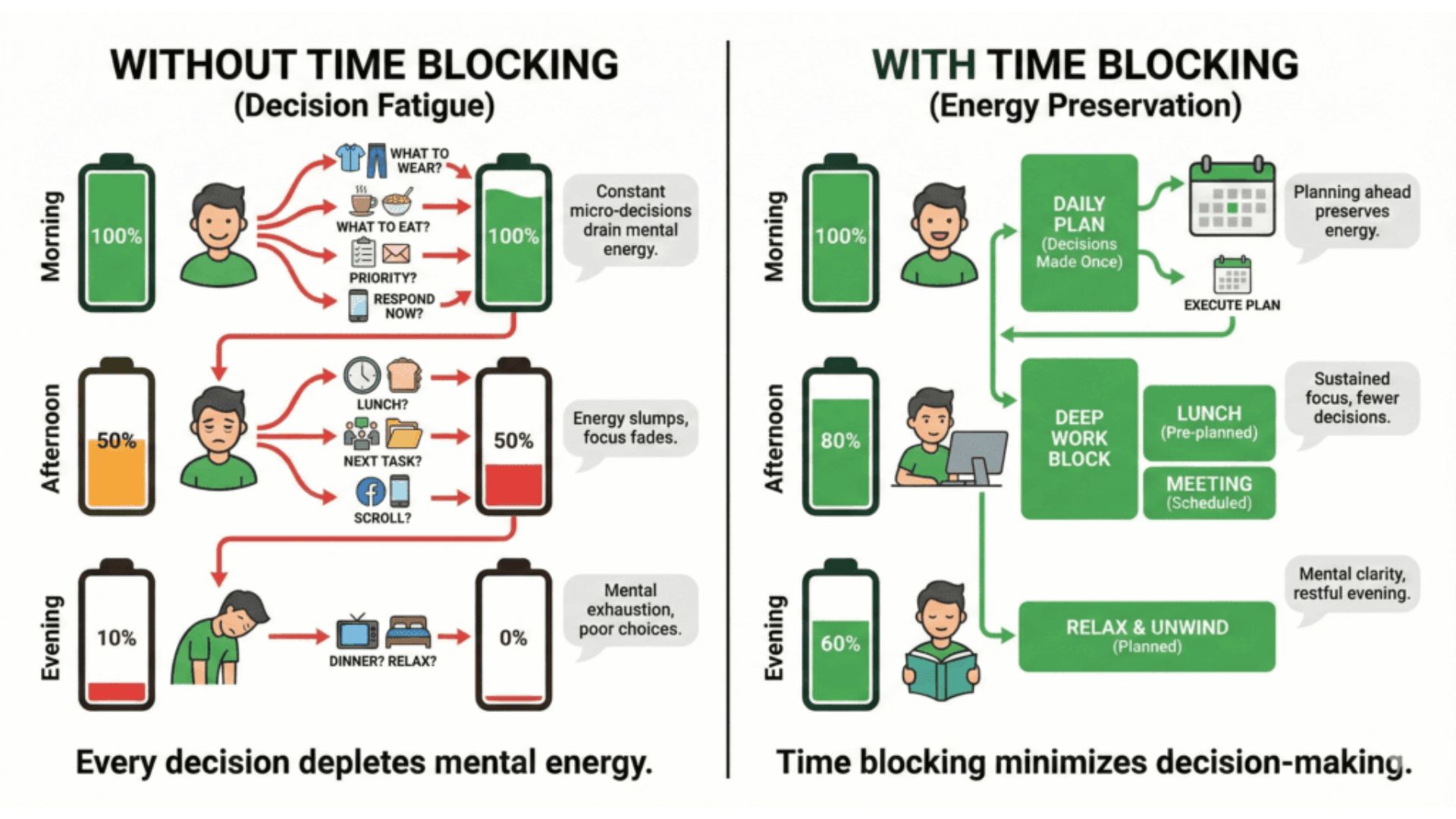
Traditional time management often treats the calendar like a grid that needs to be filled. A 30-minute opening appears, so a task goes there. Another empty slot appears after lunch, so another task gets squeezed in. The problem is that the clock does not tell us how mentally demanding a task will feel at a particular moment. A complex design problem placed in the middle of an afternoon slump can take twice as much effort as the same work handled during a period of strong concentration.
Dynamic time blocking takes a different approach. Instead of treating every hour as equally productive, it considers two things together: the difficulty of the task and the level of attention available at that point in the day. The goal is not to predict exactly when the brain will perform at its best. People differ too much for that. The practical aim is simpler—to notice recurring patterns in alertness and use them when deciding what kind of work belongs in each part of the schedule.
Attention and alertness change over the course of a day. Sleep quality, circadian timing, workload, meals, stress, interruptions, and individual chronotype can all influence how easy it feels to concentrate. Some people naturally prefer demanding work early in the day, while others settle into their best focus later. There is no universal two-hour window that works for everyone.
That variability is actually useful. Instead of copying someone else's productivity routine, a dynamic schedule starts by observing personal patterns. When does difficult work usually feel easier? When do meetings become harder to tolerate? Which tasks can still be completed when attention starts to wander?
Here, "cognitive energy" is simply a practical shorthand for alertness, attention, working-memory demands, and the ability to stay engaged with mentally difficult work. It is not a medical measurement. The point is to create a useful scheduling framework.
Many people have at least one period during the day when sustained concentration comes more easily. For some, that happens in the morning. For others, it may occur later, especially if their work schedule or chronotype favors a later start.
These periods are valuable because they can accommodate work that is difficult to do in fragments. Examples include writing a detailed report, designing software architecture, analyzing a complicated dataset, solving a difficult engineering problem, or developing a strategic plan.
The key is not to assume that every morning is automatically a high-focus period. Instead, protect the hours that consistently feel strongest.
There are also periods when concentration is adequate but extended deep work feels less appealing. These can work well for meetings, reviews, collaborative planning, interviews, research synthesis, presentations, or editing.
These tasks still require attention, but they may involve more interaction or shorter bursts of concentration than a demanding solo project.
Later in the day, some people experience more distraction or reduced alertness. Rather than forcing a complex problem into that period, it can make sense to reserve it for routine work.
Email, file organization, expense reports, calendar maintenance, standard correspondence, and other low-complexity tasks can fit here. The objective is not to declare these hours "unproductive." It is to avoid wasting a limited high-focus period on work that does not require it.
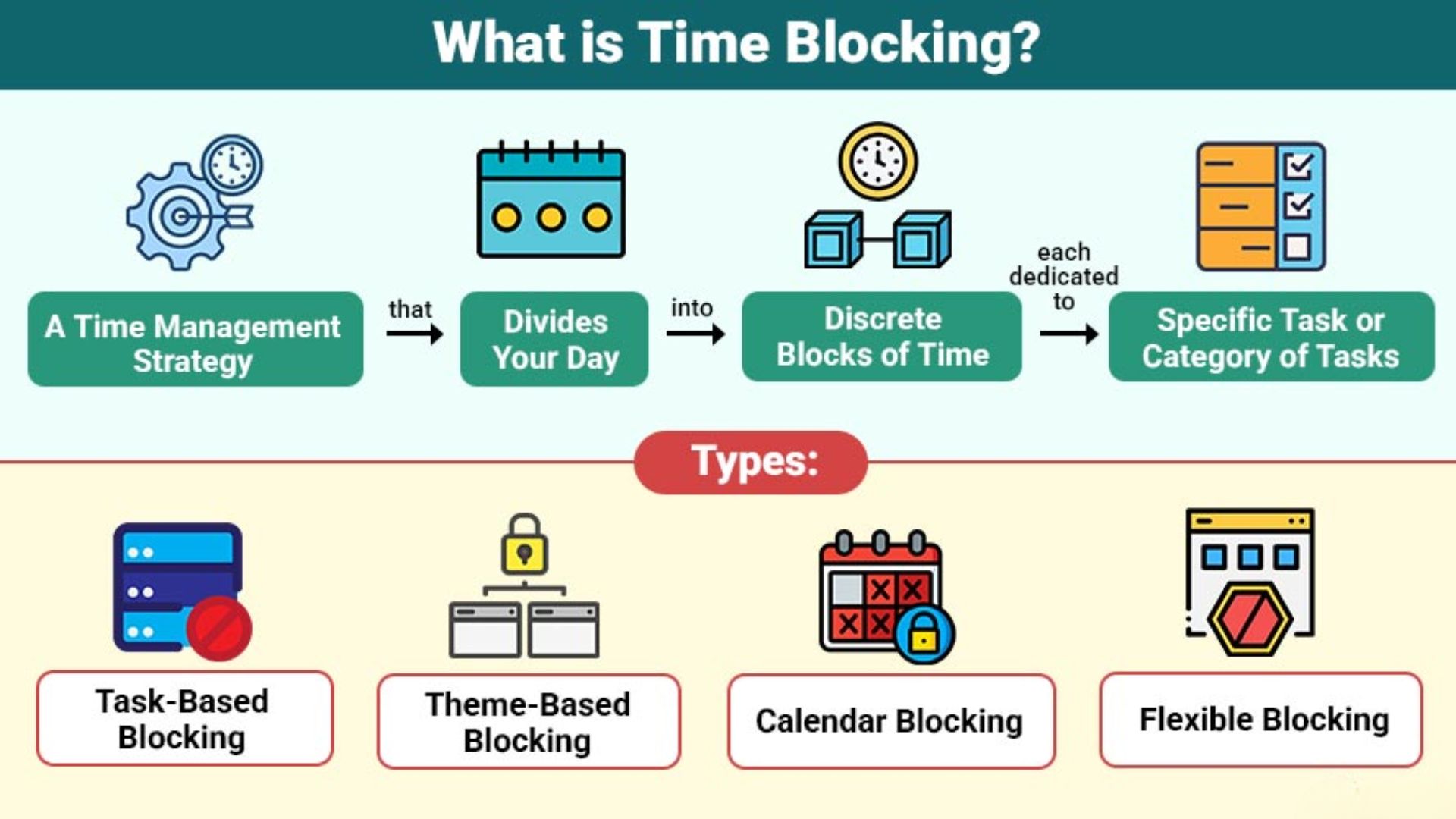
Dynamic time blocking becomes easier once tasks are grouped according to the type of attention they require. A simple three-tier system is enough.
Tier 1: Deep analytical or creative work. These tasks involve original thinking, complex problem-solving, synthesis, writing, design, or sustained analysis. They usually benefit from uninterrupted blocks and fewer context switches.
Tier 2: Collaborative and communicative work. Meetings, interviews, brainstorming sessions, presentations, project reviews, and team coordination fall into this category. They require attention and responsiveness, but the work is often structured around interaction with other people.
Tier 3: Routine administrative work. Data entry, standard email, document filing, calendar updates, expense tracking, and similar tasks generally require less sustained reasoning.
The categories are not permanent. An email may be trivial one day and require serious judgment the next. A meeting can be routine or mentally exhausting depending on its subject and participants. The useful question is always: How much sustained attention will this particular task require?
A dynamic schedule does not mean abandoning the calendar. It means giving the calendar a little more flexibility.
Some parts of the day cannot move. Client meetings, interviews, classes, medical appointments, presentations, and scheduled calls are anchor points.
Place these on the calendar first. Then work backward from them.
If a demanding meeting ends at 11:30, for example, it may be unrealistic to schedule a difficult two-hour analytical task from 11:30 to 1:30. A short transition period may be more useful. The same applies after a particularly stressful conversation or a long sequence of meetings.
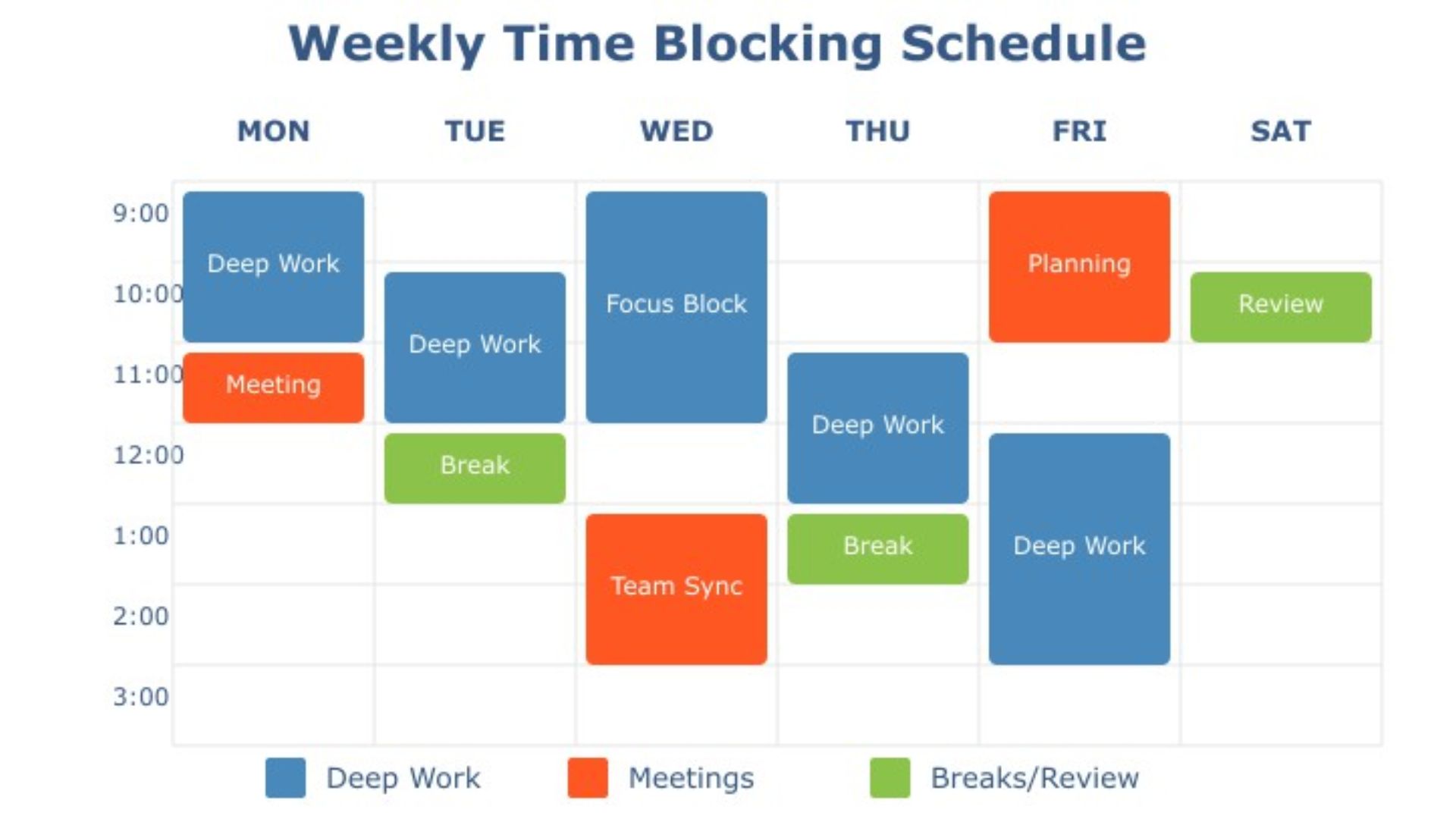
Once recurring patterns become visible, reserve the best concentration window for Tier 1 work.
A schedule might look something like this:
TimeLikely work stateExample task8:30–10:30High focusComplex analysis or writing10:30–11:00TransitionNotes, email, short break11:00–12:00Moderate focusTeam meeting or project review1:30–2:30Moderate focusCollaboration or research synthesis3:00–4:00Lower focusAdministrative work4:00–4:30BufferOverflow and unexpected tasks
This is an example, not a prescription. Someone who consistently does their best analytical work from 3:00 to 5:00 should reverse the arrangement.
The useful principle is to match the schedule to observed performance rather than forcing performance to match a generic schedule.
A calendar with every minute assigned looks efficient until the first meeting runs late.
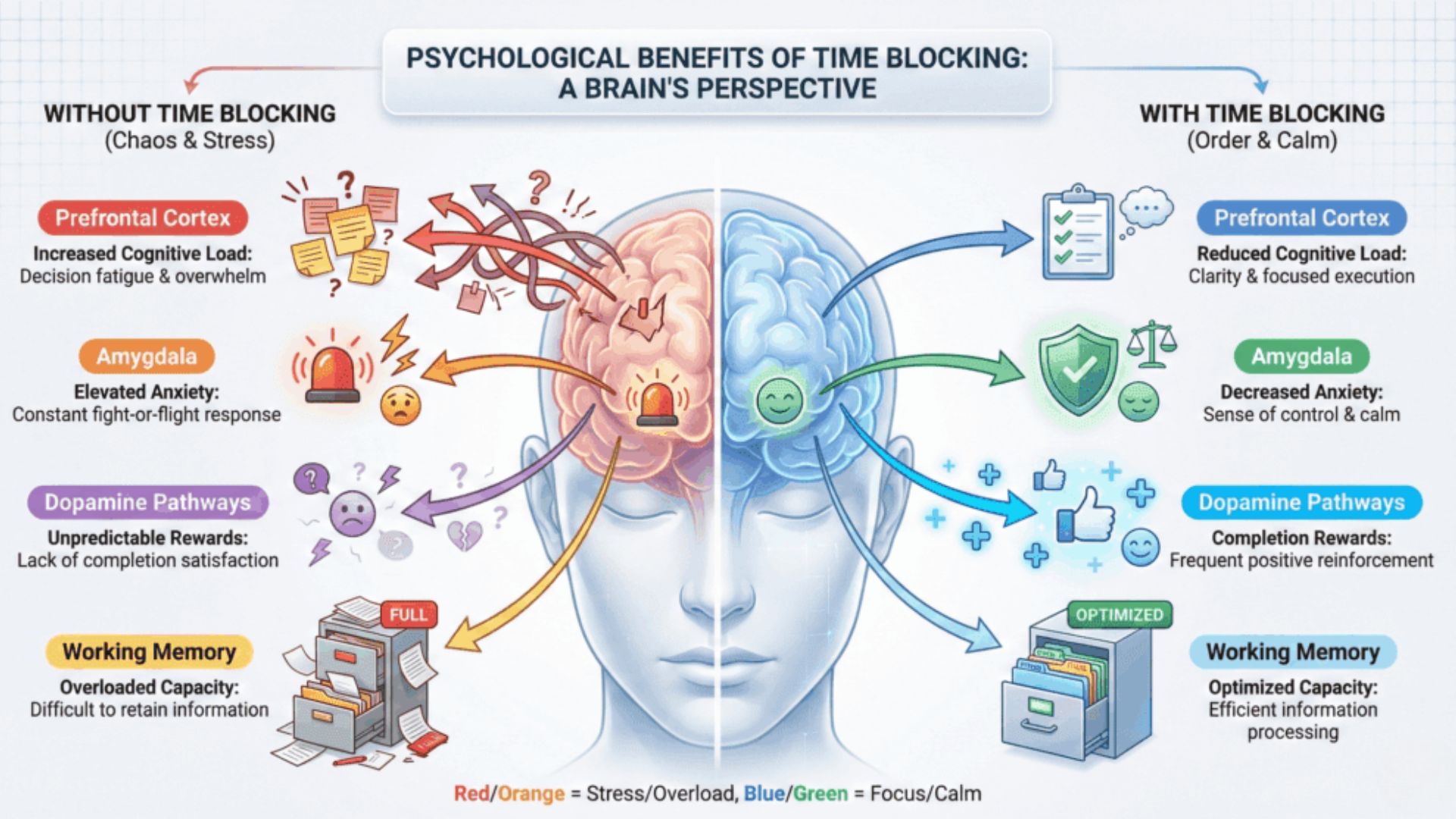
Unexpected requests, technical problems, urgent messages, and unfinished work are normal parts of knowledge work. Without some empty space, a small disruption can push every later task off schedule.
Buffer blocks provide room for that uncertainty. If an urgent issue consumes the morning focus period, a flexible schedule allows a Tier 1 task to move to another suitable window. The task has been rescheduled, not abandoned.
This distinction matters. A rigid system often turns one interruption into a completely "failed" day. A dynamic system treats interruptions as part of the planning problem.
Not every transition is expensive, but frequent switching between unrelated tasks can make focused work harder. Moving from financial analysis to messaging, then to a meeting, then back to the analysis forces attention to change direction repeatedly.
Grouping similar tasks can help.
For example, instead of checking email every 15 minutes, a schedule might contain two or three dedicated communication periods. Meetings can also be grouped where the job allows it. The result is not necessarily fewer meetings; it is fewer context switches between meetings and demanding individual work.
Dynamic time blocking works best as an experiment.
For two or three weeks, record a few simple observations:
When did difficult work feel easiest?
When did concentration fall noticeably?
Which meetings were especially draining?
Which tasks could be completed with little effort late in the day?
How often did unexpected work disrupt planned focus blocks?
The purpose is not to produce a perfect productivity score. It is to identify patterns.
A person may discover that mornings are excellent for writing but poor for meetings. Someone else may find that analytical work improves after lunch. Another person may have two strong focus periods separated by a noticeable dip.
Those observations are more useful than a generic rule about the "best" time to work.
A calendar filled with four or five hours of demanding concentration may look ambitious, but difficult work also includes transitions, preparation, research, and recovery. A more realistic plan may contain only a few substantial focus blocks, with lower-demand tasks around them.
A dynamic schedule is supposed to adapt. If a meeting runs long or an urgent problem appears, moving a task is not a failure.
The schedule should answer:
What is the best use of the next suitable block?
It does not need to answer:
Why did the original plan go wrong?
Morning-person versus night-owl labels can be useful shorthand, but real schedules are more complicated. Sleep, work hours, family responsibilities, commuting, health, stress, and environment all affect when sustained attention is practical.
The framework works better when it starts with observation rather than assumptions.
An ideal focus window is not very useful if an organization schedules mandatory meetings during it every day. Dynamic scheduling therefore requires some communication. Where possible, meeting-heavy periods can be grouped together, while recurring focus periods can be protected.
Dynamic time blocking is not about squeezing more tasks into a day. It is about making better use of the attention that is actually available.
The basic idea is straightforward: reserve stronger focus periods for work that genuinely needs them, use moderate periods for collaboration and communication, and move routine tasks into less demanding parts of the day. Keep fixed commitments visible, leave some buffer space, and adjust the plan when real life interferes.
There is no universal biological timetable. The useful part of dynamic time blocking is the willingness to notice personal patterns and plan around them. Over time, the calendar becomes less about filling every empty square and more about giving each kind of work a reasonable place to happen.