
A meeting can end with everyone believing the important points were covered, only for the details to become surprisingly difficult to reconstruct a few days later. One person remembers a deadline differently. Another has the action item buried in a notebook. A decision sits somewhere in a chat thread, while the person responsible for the next step is not entirely clear.
The problem is rarely the conversation itself. It is what happens afterward.
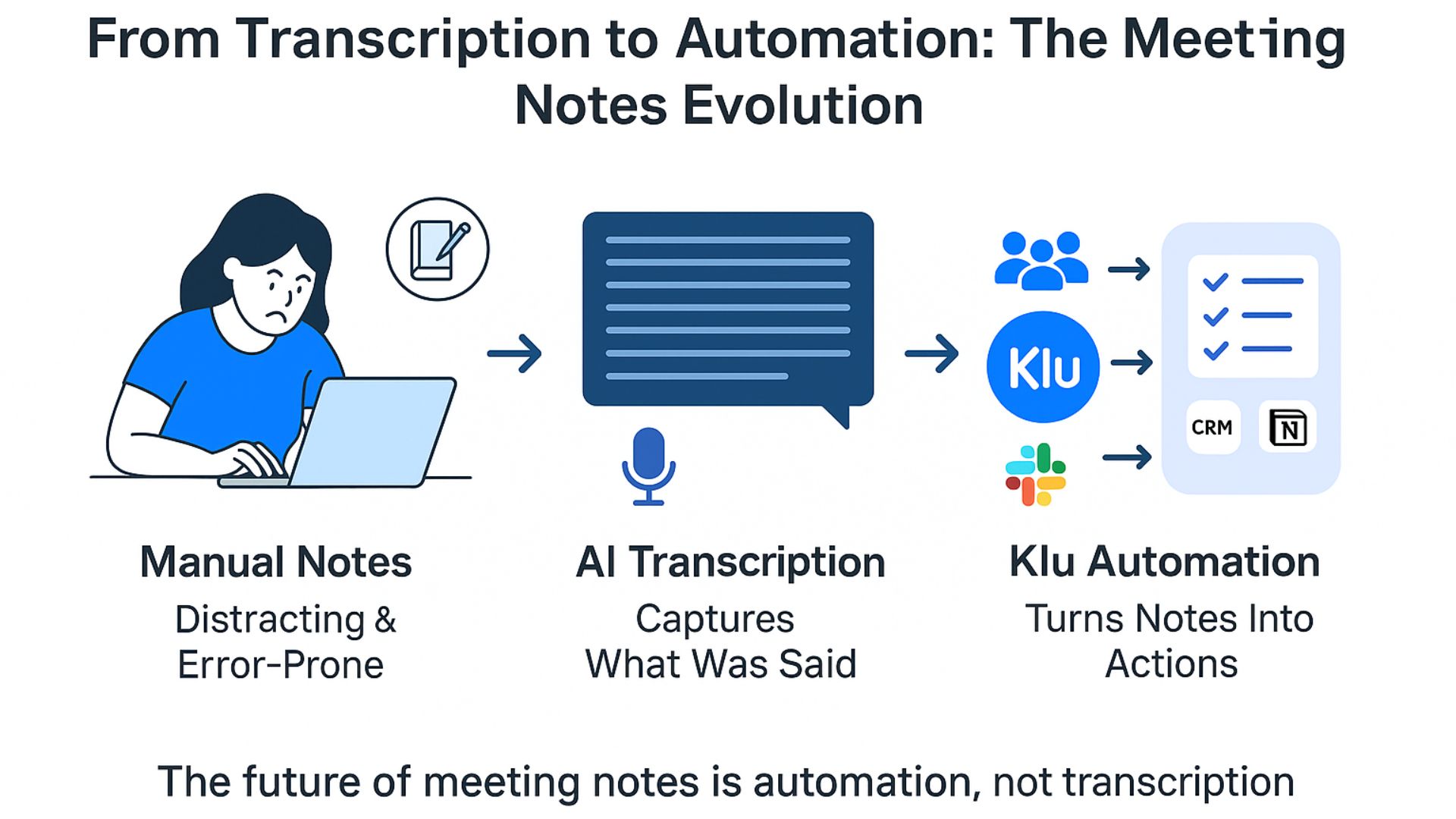
Automated meeting intelligence is designed to help with that gap. Modern systems can combine speech recognition, speaker identification, natural language processing, and language models to turn a recorded conversation into a transcript, summary, decision record, or list of follow-up tasks. Some can also connect with other business systems so that confirmed action items move into the workflow where they will actually be tracked.
That does not mean every meeting should be reduced to a machine-generated summary. The more useful approach is to treat meeting intelligence as a three-part process: capture what was discussed, verify what actually matters, and move confirmed decisions into execution.
Early meeting-recording tools focused mainly on speech-to-text conversion. The result was useful as a searchable record, but a transcript of a long meeting can be difficult to work with. People interrupt each other, repeat points, change subjects, and leave thoughts unfinished. Important decisions may appear in the middle of an otherwise routine discussion.
Meeting intelligence adds another layer.
Instead of presenting every spoken sentence with equal weight, an intelligent system can attempt to organize the discussion into categories such as topics, decisions, questions, and potential action items.
The distinction matters. A transcript tells an organization what was said. A structured meeting record attempts to explain what was important.
Several capabilities are particularly relevant when evaluating meeting intelligence systems.
Speaker identification: Separating speakers and associating statements with the appropriate participant when the audio quality and available metadata support it.
Topic and intent analysis: Identifying changes in subject matter and distinguishing questions, suggestions, commitments, and other types of statements.
Decision identification: Flagging statements that appear to represent decisions, agreements, or unresolved disagreements for human confirmation.
Action-item extraction: Finding tasks that participants appear to have assigned, along with any owner, timing, or dependency that was actually stated.
Search and retrieval: Making previous meetings easier to locate by topic, participant, decision, or other searchable information.
These capabilities are useful precisely because spoken conversation is messy. The system does not need to treat every sentence as equally important.
The hardest part of meeting intelligence is not producing a summary. It is separating useful commitments from ordinary conversation.
Consider a discussion in which someone says, “I can take a look at the database issue and let everyone know what I find later this week.” A useful system might identify that as a possible action item. But it should not automatically invent a precise deadline if nobody actually agreed on one.
That distinction is important.
A practical meeting record can be organized into three layers.
This gives readers enough context to understand what the group discussed and why the topic mattered.
This captures decisions that appear to have been made, together with relevant conditions, unresolved objections, or areas where the group did not reach agreement.
Each task should include only information supported by the meeting or another approved source:
task description
stated owner
stated deadline, if one exists
relevant dependency
expected deliverable
source passage for verification
Keeping the source passage available is especially useful. A reviewer can compare the extracted task with the original discussion instead of accepting the AI interpretation blindly.
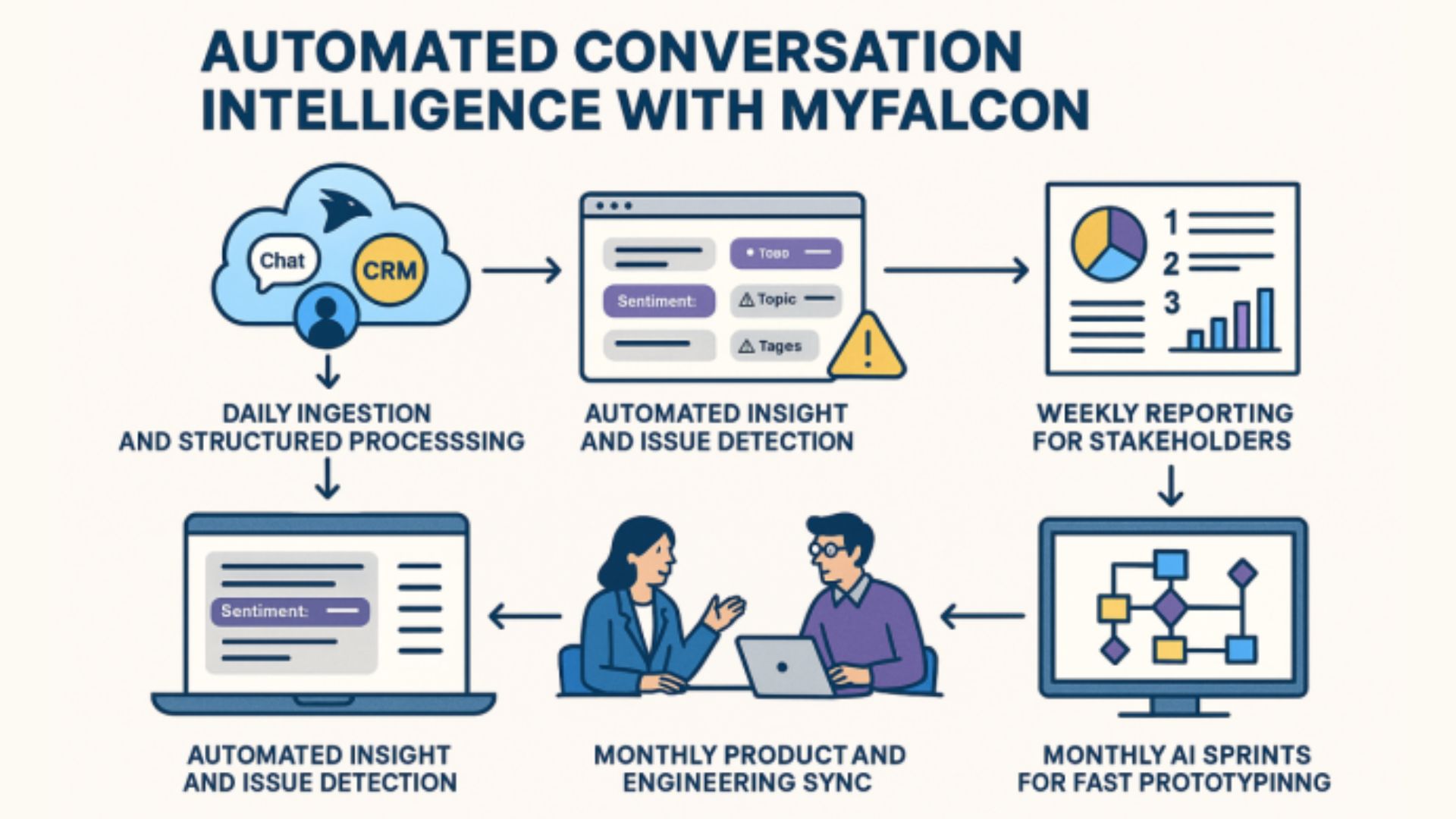
A meeting summary has limited value if it becomes another document that someone has to copy manually into a project-management system.
Some meeting intelligence products can connect with platforms such as Jira, Asana, Monday.com, or Linear, depending on the product and available integrations. In a suitable workflow, a confirmed action item can be converted into a task in the system where the team already manages its work.
The important word is confirmed.
A sensible process might work like this:
The meeting is transcribed.
Potential decisions and action items are extracted.
A participant or designated reviewer checks them.
Confirmed tasks are sent to the relevant workflow system.
The original meeting context remains available for reference.
That sequence reduces administrative work without assuming that every AI-generated task is correct.
Meeting recordings can contain much more sensitive information than ordinary business documents. A single conversation might include financial results, product plans, personnel discussions, customer information, or confidential negotiations.
That makes data governance part of the meeting-intelligence decision rather than an afterthought.
Organizations should examine where recordings and transcripts are processed, who can access them, how long they are retained, and whether customer content may be used for model training or other secondary purposes.
These concepts are sometimes mixed together.
A retention policy determines how long recordings or transcripts remain stored and when they are deleted. A data-use policy determines how the information may be processed, including whether it can be used for model improvement or other purposes.
A vendor offering short retention does not automatically answer every question about data handling. The organization's security and legal teams may need to review the complete data flow.
Not every employee needs access to every meeting.
Permission controls can limit recordings and transcripts according to project membership, organizational role, or other business requirements. Sensitive meetings may require stricter access than routine team discussions.
Searchability also deserves attention. Turning thousands of conversations into a searchable database can improve institutional memory, but it can also make sensitive information easier to discover. Access rules should therefore apply to the stored transcript and any summaries or extracted records created from it.
Some workflows may benefit from removing unnecessary personal or sensitive information before content is stored or processed further.
The specific approach depends on the organization's requirements and the information involved. The broader principle is simple: meeting intelligence should not collect, retain, or expose more information than the workflow actually needs.

Healthcare, financial services, legal work, and other regulated environments may have additional requirements around recordings, personal information, confidentiality, and record keeping.
References to frameworks such as HIPAA or financial-sector rules should not be treated as a shortcut to compliance. Whether a particular meeting-intelligence workflow is appropriate depends on the organization, the service provider, the data involved, contractual arrangements, system configuration, and applicable laws.
Using an AI meeting tool does not by itself establish regulatory compliance.
For higher-risk workflows, organizations should involve the appropriate privacy, security, legal, or compliance professionals before deployment.
Meeting intelligence can save time, but it should not be treated as a perfect record of intent.
Audio quality can affect transcription. Multiple people may speak at once. A participant may make an offhand comment that sounds like a commitment when it was not intended that way. Industry terminology can also be interpreted incorrectly.
The problem is particularly important with decisions and action items.
A summary may sound polished while quietly changing the meaning of a statement. A task may be assigned to the wrong person. A deadline may be inferred from a casual remark even though nobody actually agreed to it.
That is why the most useful review process focuses on the information that can change what happens next.
A reviewer does not necessarily need to read the entire transcript from beginning to end.
Instead, the workflow can ask the reviewer to verify:
Was the decision actually made?
Is the stated owner correct?
Was the deadline explicitly discussed?
Has an important condition been omitted?
Does the summary accurately represent disagreement or uncertainty?
Does the action item reflect what the participant actually committed to?
This makes human review much more targeted.
Recording workplace conversations raises a separate question: how will the information be used?
Meeting documentation and employee surveillance are not the same thing.
If employees believe every conversation is being permanently analyzed for performance judgments, they may become less willing to discuss unfinished ideas, raise concerns, or challenge assumptions during brainstorming sessions.
A responsible deployment should therefore establish a clear purpose for recording and explain how the resulting information will be used.
Depending on the organization's policies and applicable requirements, that may include notifying participants when recording is active, defining access permissions, limiting secondary uses, and providing appropriate ways to pause or exclude sensitive discussions.
The objective should be better documentation and follow-through, not invisible monitoring.
Saving the time previously spent writing notes is an obvious benefit, but it is not the only metric that matters.
A useful evaluation should look at what happens after the meeting.
Do employees spend less time reconstructing what was agreed?
Are extracted tasks assigned to the correct people, with fewer corrections required?
Can a team member later find the discussion and understand how an important decision was reached?
When work moves between teams, does the meeting record give the next person enough context to continue without arranging another explanation meeting?
How much time does human verification require? If reviewers spend almost as long checking AI output as they previously spent creating notes, the workflow may need redesign.
These measures provide a more realistic picture than simply counting the number of meetings processed.
Organizations do not need to automate every meeting at once.
A smaller pilot is usually easier to evaluate.
Start with meetings that have a clear business purpose and recurring structure. Project reviews, operational check-ins, or planning sessions may provide more measurable outcomes than highly sensitive or unpredictable conversations.
Do not ask the system to “understand everything.”
Specify the outputs that matter: decisions, action items, unresolved questions, owners, deadlines, or other information relevant to the workflow.
Decide which outputs require confirmation before entering another business system.
For example, a draft summary might require only a quick review, while a task that assigns a consequential responsibility should require explicit confirmation.
Keep enough transcript or recording context available for reviewers to verify important decisions. A summary without supporting context is harder to audit when something appears incorrect.
Once an action item has been verified, move it into the team's existing project or workflow system where appropriate.
Compare the new process with the old one. Track time spent on note preparation, correction rates, follow-up work, action-item accuracy, and reviewer effort.
If the workflow performs consistently, consider other meeting types. Sensitive meetings should not automatically be added simply because the first pilot worked well.

The strongest meeting-intelligence workflows do not try to turn every spoken sentence into structured data.
They focus on the parts of a conversation that have consequences after the meeting ends.
A good system can capture the discussion, identify potential decisions and commitments, and organize them so that a person can verify what actually happened. Once confirmed, those records can move into the tools that manage projects, tasks, and follow-up work.
That creates a useful chain:
Conversation → Capture → Verification → Execution
The technology handles the repetitive parts of that chain. People remain responsible for interpreting context, correcting mistakes, and confirming decisions that matter.
That is a more practical role for meeting intelligence than simply producing another transcript. The value comes from making important decisions easier to find, action items easier to verify, and follow-up work easier to manage—while keeping privacy, security, and human judgment in the workflow.